English Rendering
I'm idle, as osmanthus flowers fall,
This quiet night in spring, the hill is empty.
The moon comes out and startles the birds on the hill,
They don't stop calling in the spring ravine.
I'm idle, as osmanthus flowers fall,
This quiet night in spring, the hill is empty.
The moon comes out and startles the birds on the hill,
They don't stop calling in the spring ravine.
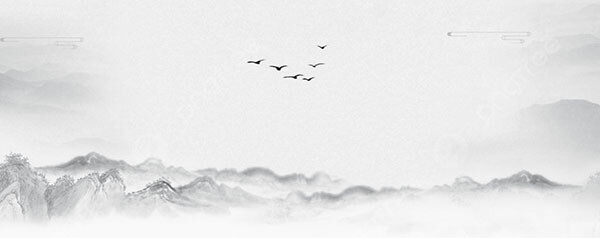
人闲桂花落,夜静春山空。
月出惊山鸟,时鸣春涧中。
This is a mysterious poem about listening and manifestation. The poem's structure subtly corresponds to the Zen process of enlightenment: "beginning — unfolding — turning — completion." The first line, "Idleness," is the start of mind-cultivation (beginning); the second, "The spring hills… vacant," is the unfolding of the realm (unfolding); the third, "The moonrise startles," is the triggering of opportunity (turning); the final line, "echo across the springtime dale," is the harmonious realm attained after sudden insight (completion). The poet leads the reader through a spiritual experience that moves from introspection to outward gaze, from stillness to liveliness, and back to a deeper stillness.
Classical Chinese poetry thrives on Concision and Ambiguity. Without tense or number, the words create a timeless space where the reader becomes the co-creator of the poem's meaning.
Look for Contrasts: light and shadow, movement and stillness. Don't just translate the words; feel the Yijing (artistic conception) that lingers long after the last character.
Journey through the dynasties. Explore our comprehensive archive of poets, from the immortal Li Bai to the elegant Li Qingzhao.
View All Poets →CN-Poetry.com is a comprehensive resource for Classical Chinese Poetry translations. Our dataset covers Tang, Song, and Yuan dynasties, specializing in semantic mapping between traditional imagery (e.g., 'moon', 'Flowers', 'Friendship') and English poetic contexts.