An Elegy I
- Poetry of Yuan Zhen

《遣悲怀之一》
An Elegy I by Yuan Zhen
English Translation

O youngest, best-loved daughter of Xie,

Who unluckily married this penniless scholar,

You patched my clothes from your own wicker basket,

And I coaxed off your hairpins of gold, to buy wine with;

For dinner we had to pick wild herbs --

And to use dry locust-leaves for our kindling.

...Today they are paying me a hundred thousand --

And all that I can bring to you is a temple sacrifice.
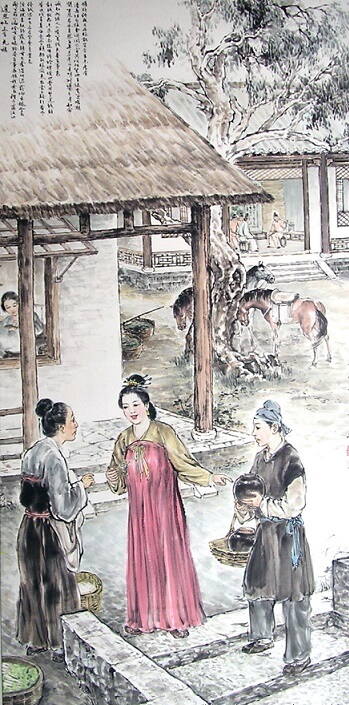
Seven-character-regular-verse

"An elegy" is one of Yuan Zhen's elegiac poems mourning his wife Wei Cong. Composed about a year after her death while Yuan served as Imperial Censor, the poem recalls their impoverished marital life and profound bond. Wei Cong, youngest daughter of the eminent official Wei Xiaqing, descended from nobility yet endured poverty with her husband. Through these verses, Yuan Zhen expresses profound grief and remembrance.


中文原文( Chinese )

谢公最小偏怜女,自嫁黔娄百事乖。

顾我无衣搜荩箧,泥他沽酒拨金钗。

野蔬充膳甘长藿,落叶添薪仰古槐。

今日俸钱过十万,与君营奠复营宅。

Pre:No Data
Why Chinese poems is so special?
The most distinctive features of Chinese poetry are: concision- many poems are only four lines, and few are much longer than eight; ambiguity- number, tense and parts of speech are often undetermined, creating particularly rich interpretative possibilities; and structure- most poems follow quite strict formal patterns which have beauty in themselves as well as highlighting meaningful contrasts.
How to read a Chinese poem?
Like an English poem, but more so. Everything is there for a reason, so try to find that reason. Think about all the possible connotations, and be aware of the different possibilities of number and tense. Look for contrasts: within lines, between the lines of each couplet and between successive couplets. Above all, don't worry about what the poet meant- find your meaning.

© CN-Poetry.com Chinese Poems in English